The Honest Reason Yeast Helped Me Learn Fresh Milled Flour

When I first started learning about fresh milled flour, I assumed I would naturally continue doing what I already loved: sourdough. After all, sourdough was what sparked my interest in baking in the first place. While I’ve been cooking for my family for many years, baking is something I’ve grown into over the last several years. Sourdough gave me confidence in the kitchen, so it seemed only natural to combine it with fresh milled flour right away.
What I didn’t realize was that I was trying to learn two completely different things at the same time.
Looking back now, I’m actually grateful that yeast became part of my journey. It gave me consistency when everything else felt new, and it helped me understand how fresh milled flour behaves without adding the extra variables that come with sourdough. That doesn’t mean I’ve given up on sourdough. In fact, sourdough is still my ultimate goal. But this experience has reminded me that sometimes learning one thing at a time is the best way forward.
Why I Tried Sourdough First with Fresh Milled Flour
If you’ve followed this fresh milled flour series from the beginning, you already know how much I enjoy sourdough. I love the flavor, I love the process, and I love finding ways to incorporate it into our meals.
Naturally, when I started milling my own flour, I assumed I would simply keep doing what I had always done. What I failed to consider was that fresh milled flour behaves differently than commercial flour. It absorbs water differently, often requires recipe adjustments, and sometimes responds differently during fermentation.
Instead of learning one new skill, I was trying to learn two.
I was learning fresh milled flour while also trying to learn how fresh milled flour would affect my sourdough process. Looking back, it’s no wonder I felt frustrated at times. Every time something didn’t turn out as expected, I had to wonder whether the issue was the flour, the hydration, the fermentation, or something else entirely.
There’s a reason so many experienced bakers encourage people to learn one skill at a time. While I don’t regret jumping in, I do think I would have saved myself some frustration if I had slowed down and focused on understanding the flour first.
How Yeast Helped Me Learn Fresh Milled Flour
One of the biggest advantages of using yeast while learning fresh milled flour was consistency.
When a loaf didn’t turn out the way I expected, I could usually narrow down the problem fairly quickly. Was I using the wrong wheat berry? Did I need more water? Did I measure something incorrectly? Because yeast is predictable, it removed one layer of uncertainty from the process.
That gave me room to learn.
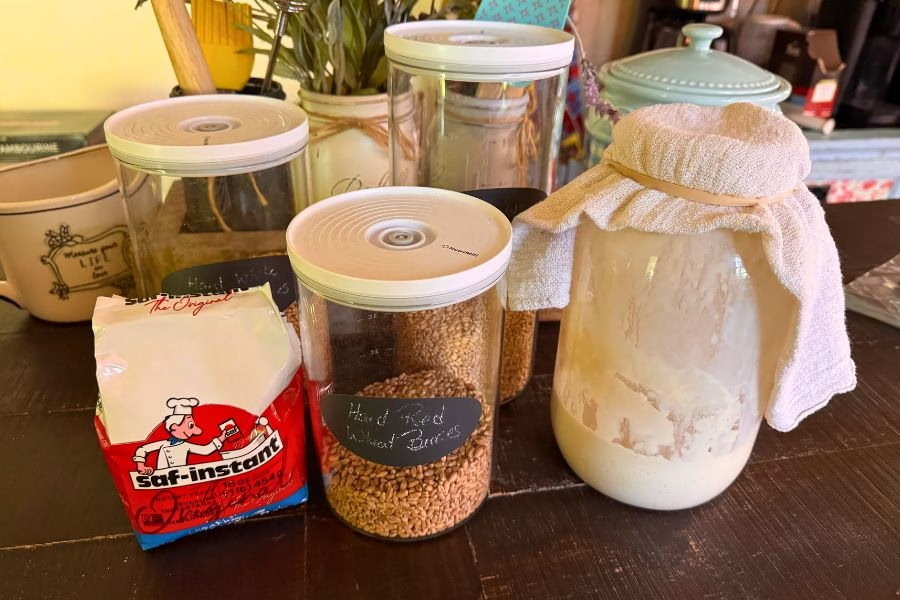
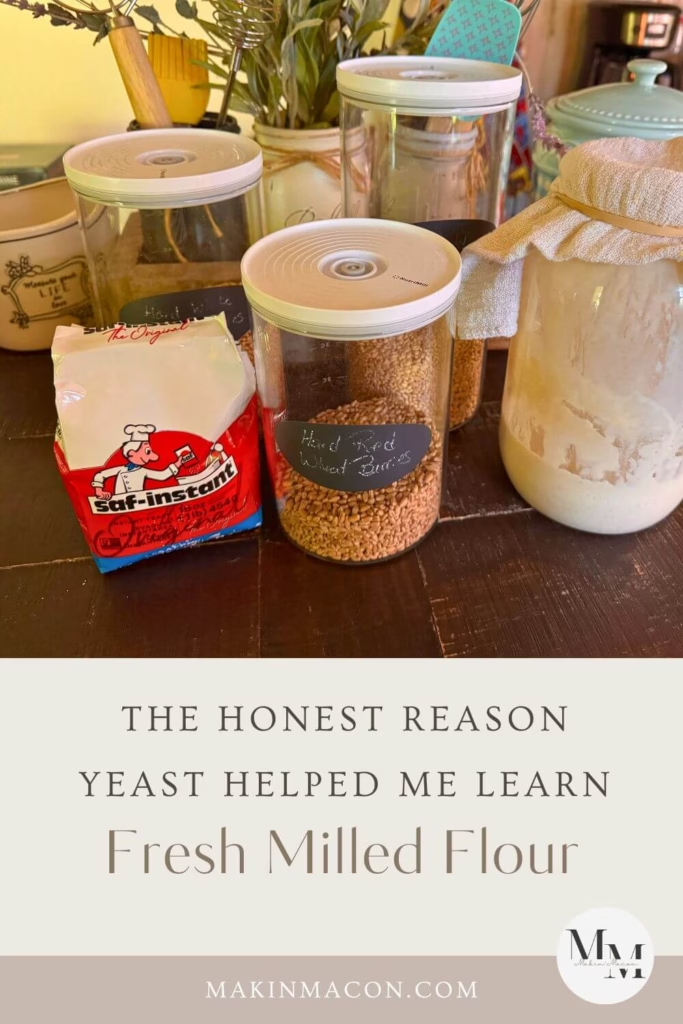
As I worked through different recipes, I began noticing how dough felt, how quickly it absorbed water, and how different wheat berries behaved. I learned that hard white wheat became my go-to for breads and rolls. I learned that soft white wheat worked beautifully for things like waffles and other softer baked goods. Most importantly, I learned that fresh milled flour wasn’t nearly as intimidating as it first seemed.
Yeast gave me confidence while fresh milled flour was still teaching me.
Every successful loaf reinforced what I was learning and encouraged me to keep going. Instead of wondering if everything would fail, I started seeing progress. Those small successes helped me build a foundation that I can continue building on as I learn more.
What Fresh Milled Flour Is Teaching Me About Learning
One of the unexpected lessons in this journey has very little to do with flour.
It’s about how I learn.
Years ago, I probably would have thrown myself into this full speed ahead. I would have spent hours researching, testing, and trying to master everything as quickly as possible. While enthusiasm isn’t a bad thing, experience has taught me that rushing doesn’t always lead to lasting results.
I’ve learned that I retain information better when I give myself time to absorb it. I learn better when I focus on one skill before piling another one on top. Most importantly, I enjoy the process more when I remove some of the pressure.
Between homeschooling, ministry responsibilities, family life, and everything else that comes with running a household, I’ve learned that it’s okay to move at a slower pace. Fresh milled flour has reminded me that growth doesn’t have to be rushed to be meaningful.
Sometimes the best thing we can do is take the next step instead of trying to sprint to the finish line. The lessons tend to stick a lot better when we give ourselves time to learn them.
Why I Still Love Sourdough
Even though yeast has been my teacher during this season, sourdough still has my heart.
There’s just something about the flavor that I love. Whether it’s a loaf of bread, a batch of cookies, or another discard recipe, I find myself gravitating toward that familiar sourdough taste. It’s one of the reasons I haven’t given up on learning fresh milled flour sourdough.
For now, though, I’ve simplified things.
At the moment, I’m still using my regular sourdough starter that is fed with unbleached all-purpose flour. That approach works well for our family and removes a lot of stress from the process. Could I focus entirely on fresh milled flour sourdough right now? Probably. But I know myself well enough to recognize that pushing too hard would likely lead to frustration and burnout.
This season is about learning, not proving anything. I’d rather move slowly, continue gaining confidence, and enjoy the journey than rush ahead and lose the joy that made me start in the first place.
My Advice for Beginners Learning Fresh Milled Flour
If I could go back and give myself one piece of advice when I started this journey, it would be this: don’t be afraid to start simple.
When I began working with fresh milled flour, I immediately tried to combine it with sourdough because that’s what I already enjoyed. Looking back, I can see that I was adding a lot of extra variables before I truly understood how the flour itself behaved.
Fresh milled flour already has a learning curve. You’re learning different wheat berries, hydration levels, recipe adjustments, and how dough feels compared to what you may be used to. Adding sourdough on top of all that meant I was trying to learn multiple things at the same time.
For me, yeast created a simpler path.
It allowed me to focus on the flour itself without constantly wondering whether my starter, fermentation times, or another sourdough variable was affecting the outcome. When something didn’t turn out right, it was easier to identify the problem and make adjustments.
That doesn’t mean sourdough isn’t worth learning. In fact, sourdough is still where I hope to go with fresh milled flour. I love the flavor, and I enjoy the process. But I’ve learned that there is value in building confidence first.
If you’re just getting started, don’t feel pressured to do everything at once. Learn a few recipes. Bake a few loaves. Get comfortable with how fresh milled flour behaves in your kitchen and with the foods your family already enjoys.
Once you’ve built that foundation, you can begin experimenting with more advanced techniques if that’s something you want to pursue. The goal isn’t to get there quickly. The goal is to build confidence, enjoy the process, and create habits that you can sustain long term.
Where I Am Right Now
Right now, yeast gives me consistency and sourdough gives me flavor.
My goal is still to become more confident with fresh milled flour sourdough, but I’m no longer in a hurry to get there. One of the biggest lessons I’ve learned through this entire journey is that sustainable growth usually happens slowly.
Every loaf teaches me something. Every mistake teaches me something. Every success teaches me something.
For now, I’m content to keep learning one loaf at a time. The more I learn about fresh milled flour, the more I realize that this isn’t a destination. It’s a skill that grows over time, and that’s part of what makes the journey so rewarding.
Watch My Fresh Milled Flour Journey on YouTube
If you’d like to follow along with this journey beyond the blog, be sure to check out my YouTube videos where I share the successes, failures, and lessons I’m learning with fresh milled flour along the way.
👉 New to fresh milled flour? Start here.
If you’re just joining this journey, I encourage you to explore some of the other posts in this series:
- Fresh Milled Flour for Beginners: A Simple Year-Long Family Journey
- Fresh Milled Flour Storage: Simple Rhythms That Actually Work
- Hard White Wheat: My Go-To Flour for Fresh Milled Bread
- What 6 Months of Fresh Milled Flour Has Taught Me
- Fresh Milled Flour Conversion Tips for Everyday Baking
You’ll also find a few simple fresh milled flour recipes I’ve tested and enjoyed along the way. My goal isn’t to overwhelm you with information but to help make this journey feel approachable for everyday families.
From My Kitchen to Yours
Over the past year, I’ve had the chance to use several NutriMill products in my own kitchen, and they’ve truly become part of our everyday rhythm.
The NutriMill Classic Grain Mill has been the biggest game changer for us. Being able to mill fresh flour at home has not only improved the quality of our baking, but it’s also helped me feel more confident about what I’m feeding my family.
I’ve also started using a few of their newer products, like the dough mats (which I didn’t realize I needed until I used one!) and the Bosch Universal Plus Mixer, which has been a huge help as I’ve grown more serious about baking.
What I appreciate most is that these are tools built to last. From my experience, NutriMill stands behind their products, and that matters when you’re investing in your kitchen.
If you’ve been considering a grain mill or upgrading your baking tools, I’d simply encourage you to keep an eye on their sales. You can use my code MAKINMACON for savings on select products (like mixers and accessories), though it doesn’t currently apply to the grain mill.
If you do choose to shop through my link or use my code, it’s a simple way to support our family and the work we’re doing here at Makin’ Macon—and I’m truly grateful.
I’ll always share honestly what’s working in my kitchen—and this is one of those things I’d choose again without hesitation.
✨ Join the Rooted Table!
Get fresh recipes, freezer tips, and encouragement for home cooks delivered straight to your inbox. When you subscribe, you’ll also receive my 15 Frugal Family Meals plan as a free gift.
I’m so glad you’re here.
And remember, I’m always praying for you, even if I don’t know who you are. 💛