Fresh Milled Flour Storage: Simple Rhythms That Actually Work

Fresh milled flour storage is one of those things that sounds simple… until you’re actually living it out in a busy, real life kitchen.
When I first started working with fresh milled flour, I thought there had to be a perfect system. The right containers, the right timing, the right way to do everything. But what I’ve learned is that fresh milled flour storage isn’t just about what’s “best” on paper. It’s about what actually works in your home, with your schedule, and in the middle of real life.
I’m still learning. I don’t have this perfected. But I have found a rhythm that works for us, and I want to share that with you.
Fresh Milled Flour Storage Starts with Wheat Berries
The first thing we need to talk about is where and how we store our wheat berries. Because if you’re anything like me, you probably bought them in bulk and then thought, “Okay… now what?”
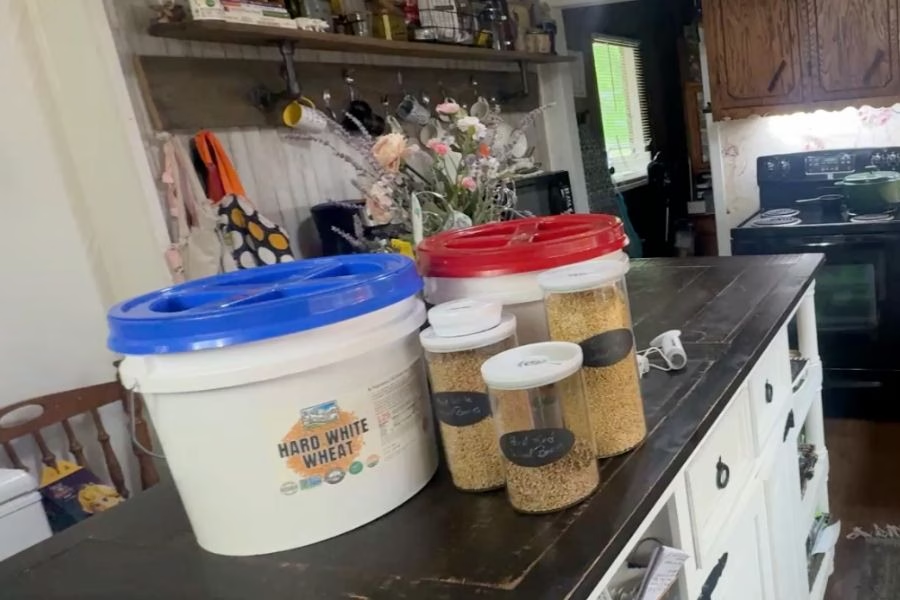
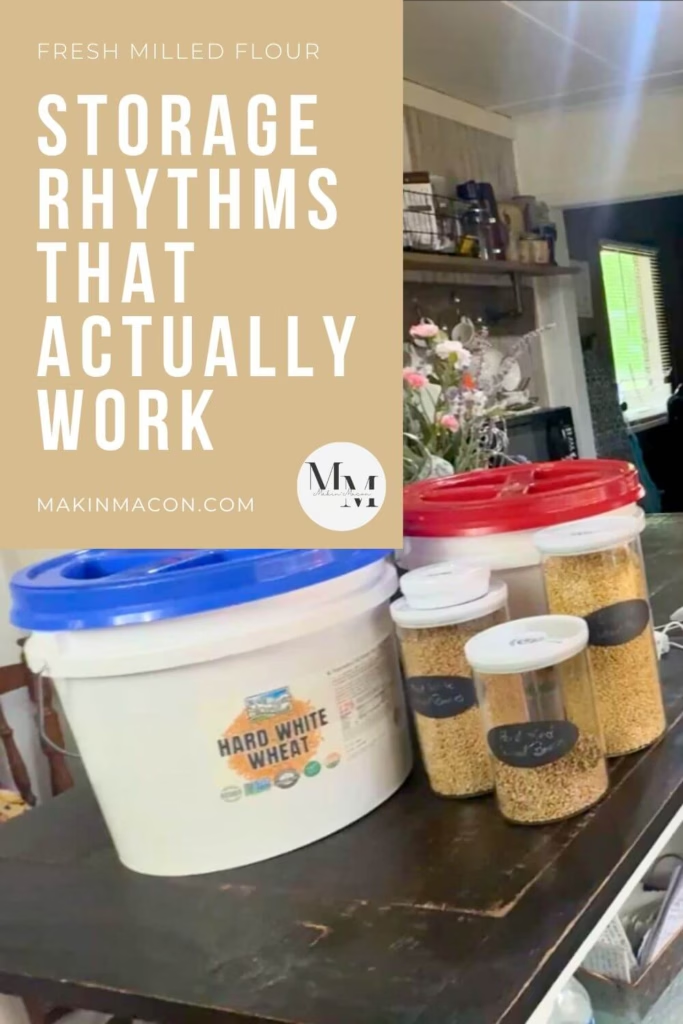
For me, I store my wheat berries in 5 gallon buckets. It’s simple, it keeps things contained, and it works well for the amount we use. But if you’re using buckets, I cannot recommend this enough: get gamma seal lids.
This is one of those places I would link what I personally use, because it made a huge difference for me.
I’m saying that from experience, not just preference.
When we first got our buckets, they had the standard sealed lids. Every time I needed flour, I had to pry that thing open. I’m right handed, so I would twist and pull over and over again. I didn’t think much about it at the time… until my arm started hurting.
Long story short, I ended up with tennis elbow.
Now, I can’t say with 100% certainty that those lids caused it, but I can tell you that repeatedly trying to open them definitely didn’t help. After weeks of pain, a doctor visit, and finally a steroid shot, I learned my lesson.
Gamma seal lids were ordered immediately.
And let me tell you, they are worth it.
They twist on and off easily, they seal well, and they make accessing your wheat berries simple instead of frustrating. Sometimes the smallest changes make the biggest difference in keeping a system sustainable.
Fresh Milled Flour Storage and Where I Buy My Wheat Berries
I’ve ordered wheat berries from a couple of different places, depending on availability.
I’ve purchased from NutriMill before, and I always recommend checking there first. Recently, I noticed their bulk options were limited, so I ordered from Palouse Brand instead. The quality was excellent, shipping was fast, and everything arrived exactly as expected.
That said, this isn’t about where you have to buy from. It’s just what has worked for me so far.
If you choose to order from NutriMill, be sure to use my code MAKINMACON. You can save $20 on select larger purchases. Our family does earn a small commission on your purchase.
Making Fresh Milled Flour Storage More Convenient in the Kitchen
While I store my bulk wheat berries in buckets, I don’t keep those buckets in my kitchen. Mine are stored in the laundry room, which means if I had to go drag them out from there every single time I needed flour, I probably wouldn’t.
So I keep a smaller amount in glass airtight jars in my kitchen.
This has been a game changer for convenience.
The jars I use have an airtight seal (I use these glass jars from NutriMill), and I keep them filled so I can quickly scoop what I need without stopping everything to go get the bucket.
It keeps my workflow moving, especially when I’m in the middle of cooking, homeschooling, or just trying to get something on the table.
Because let’s be honest… if something isn’t convenient, we’re less likely to stick with it.
Fresh Milled Flour Storage in Real Life
Now let’s talk about the part that gets people a little stirred up… storing the flour itself.
You’ll hear over and over again that fresh milled flour is best used immediately. And that’s true. Right after milling, all of the nutrients are at their peak.
But here’s where real life comes in.
If I had to pull out my mill every single time I needed flour, I wouldn’t do it.
I keep my NutriMill Classic, which is the bigger of their mills, stored in my laundry room. And I know for a fact that I’m not going in there to drag it out every time I need flour.
We run a busy home. And the mill isn’t quiet. School may be going on, someone could be sleeping, or I may be in the middle of something else entirely. If my child asks for something, or I need to throw a meal together quickly, I’m not stopping everything to go mill just enough flour for one recipe.
I’m going to reach for what’s easiest.
And if fresh milled flour isn’t already prepared, that would mean reaching for commercial flour.
So instead, I mill ahead.
I usually mill enough flour for the week when I know I have a heavier baking schedule. If I’m already using the mill for bread, I go ahead and make extra so I don’t have to think about it later.
And for storage, I keep it simple.
Right now, I’m using containers that seal well, even if they aren’t fancy. One of mine is literally a reused container from something else. It works, it seals, and it holds the amount I need.
Could I upgrade? Sure.
But this works for me right now, and that’s what matters.
The Nutrient Side of Fresh Milled Flour Storage
There’s a lot of conversation around nutrients when it comes to fresh milled flour storage.
Yes, nutrients begin to diminish over time after milling. That’s true. Once the wheat berry is broken down, the bran and germ are exposed to air, light, and heat, which slowly affects certain vitamins and healthy oils.
But what I’ve found, through both research and simply living this out, is that it’s not as instant as some make it sound.
Research shows that while some nutrients begin to decline after milling, the process is gradual, not immediate. Whole grain flour can still retain a good amount of its nutritional value for days or even weeks, especially when stored properly.
And that “stored properly” part really matters.
For me, that looks like keeping my flour in containers that seal well, stored in a cool, dry place away from light. If I know I won’t use it quickly, the refrigerator or freezer is always an option to help slow that breakdown even more. But most of the time, I’m working within a week’s window and storing it in airtight containers in my kitchen.
Now here’s the reality.
If my fresh milled flour isn’t readily available, I tend to reach for the unbleached commercial flour.
Not because I want to… but because it’s convenient.
So for me, milling ahead and storing it well means I actually use it consistently. This is especially helpful on days I’m making something simple like our homemade waffles.
And at the end of the day, something is still better than nothing.
If milling ahead for a few days or even a week means I consistently use fresh milled flour instead of going back to store bought, then that’s a win in my kitchen.
For me, consistency matters more than perfection.
You may choose to mill daily, and that’s wonderful. But if that isn’t realistic for your life, don’t let that stop you from starting.
Find what works for you.
What I’m Learning in This Fresh Milled Flour Journey
This whole fresh milled flour process is still a learning curve for me.
I’ve grabbed the wrong flour before, like the time I used soft white wheat for a dough recipe that needed hard white. The dough tore, and I stood there wondering what went wrong… until I realized what I had done.
I’ve had things turn out beautifully, and I’ve had things completely flop.
That’s part of this journey.
What I keep coming back to is this: test, test, and test again.
The more I work with fresh milled flour, the more I understand how it behaves. And the more I understand it, the more confident I become in the kitchen.
Moral of the story… don’t give up.
Creating a Fresh Milled Flour Storage System That Works for You
If there’s one thing I want you to take away from this post, it’s this: your system doesn’t have to look like anyone else’s.
You don’t need the perfect setup. You don’t need the most expensive containers. You don’t need to have everything figured out.
You just need a system that works for your life.
For me, this is the fresh milled flour storage system that works for us right now:
- Bulk wheat berries stored in buckets with gamma seal lids
- Smaller jars in the kitchen for easy access
- Milling once a week when I know I’ll need it
- Using simple containers for flour storage
It’s not perfect, but it’s sustainable. And sustainable is what keeps me going.
Watch My Fresh Milled Flour Storage Setup
If you’re more of a visual learner, this will walk you through exactly how I’m doing this step by step in real life.
From My Kitchen to Yours
Over the past year, I’ve had the chance to use several NutriMill products in my own kitchen, and they’ve truly become part of our everyday rhythm.
The NutriMill Classic Grain Mill has been the biggest game changer for us. Being able to mill fresh flour at home has not only improved the quality of our baking, but it’s also helped me feel more confident about what I’m feeding my family.
I’ve also started using a few of their newer products, like the dough mats (which I didn’t realize I needed until I used one!) and the Bosch Universal Plus Mixer, which has been a huge help as I’ve grown more serious about baking.
What I appreciate most is that these are tools built to last. From my experience, NutriMill stands behind their products, and that matters when you’re investing in your kitchen.
If you’ve been considering a grain mill or upgrading your baking tools, I’d simply encourage you to keep an eye on their sales. You can use my code MAKINMACON for savings on select products (like mixers and accessories), though it doesn’t currently apply to the grain mill.
If you do choose to shop through my link or use my code, it’s a simple way to support our family and the work we’re doing here at Makin’ Macon, and I’m truly grateful.
I’ll always share honestly what’s working in my kitchen, and this is one of those things I’d choose again without hesitation.
What’s Next in Our Fresh Milled Flour Journey
If you’re walking through this journey too, I’d love for you to explore the Fresh Milled Flour section under Recipes here on the blog.
If you’re working to build a rhythm with fresh milled flour in your own kitchen, I hope this encourages you to keep going. However you approach fresh milled flour storage, the goal is to make it work for your real life.
And if you’d like new recipes, tips, and encouragement sent straight to your inbox, you can join the Rooted Table email list.
I’m so glad you’re here.
And remember, I’m always praying for you, even if I don’t know who you are.