What 6 Months of Fresh Milled Flour Has Taught Me

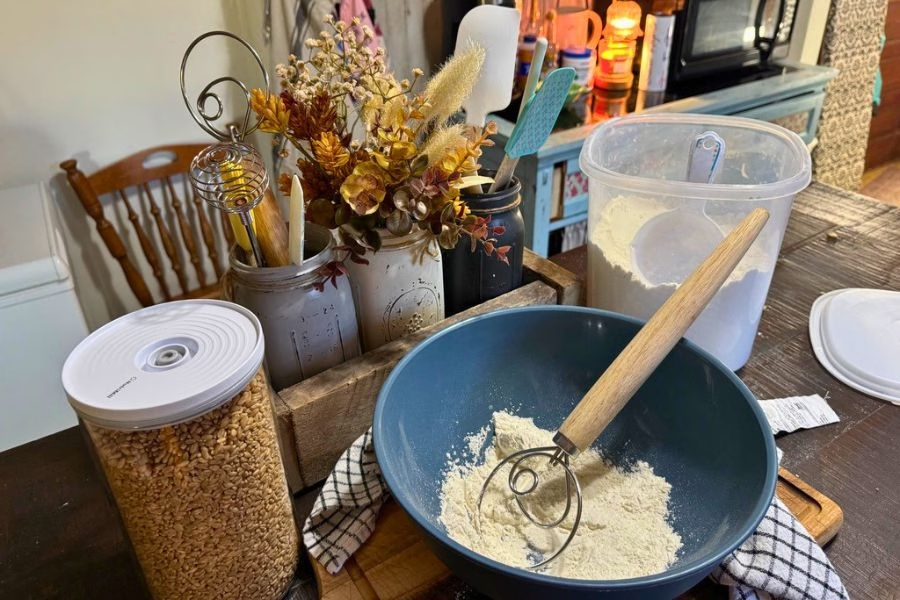
Six months ago, I started this fresh milled flour journey with a grain mill, a few wheat berries, and a lot of questions. I had watched videos, read blog posts, and listened to people talk about the benefits of milling flour at home. What I didn’t realize was how much I would learn along the way.
Looking back now, 6 months of fresh milled flour has taught me far more than how to make bread. It’s taught me patience, consistency, and the importance of finding rhythms that work for my family. Some lessons came easily. Others came through dense loaves, failed experiments, and more than a few moments where I questioned what I was doing.
If you’ve been following along since the beginning of this series, thank you for coming on this journey with me. If you’re new here, I hope this post encourages you. My goal has never been to present myself as an expert. There are people who have been doing this for years who know far more than I do. I’m simply sharing what I’m learning as I go and hopefully making the process feel a little less intimidating for someone else.
One of the biggest surprises over the last six months is that fresh milled flour has gradually become part of our lifestyle instead of feeling like a project. That’s a very different place to be than where I started.
What 6 Months of Fresh Milled Flour Taught Me About Time and Systems
If there is one lesson that stands above all the others, it’s this: fresh milled flour takes time.
When I first started, I assumed most of my learning would happen in the first few weeks. I thought I would figure out which wheat berries I liked, learn a few recipes, and settle into a routine. Instead, I discovered that fresh milled flour has a learning curve of its own.
There are different wheat berries to learn, recipe conversions to understand, hydration levels to adjust, and baking techniques that don’t always behave the way they do with commercial flour. Then there’s the simple reality of figuring out what your family will actually eat.
What surprised me most wasn’t the flour itself. It was realizing how important systems are.
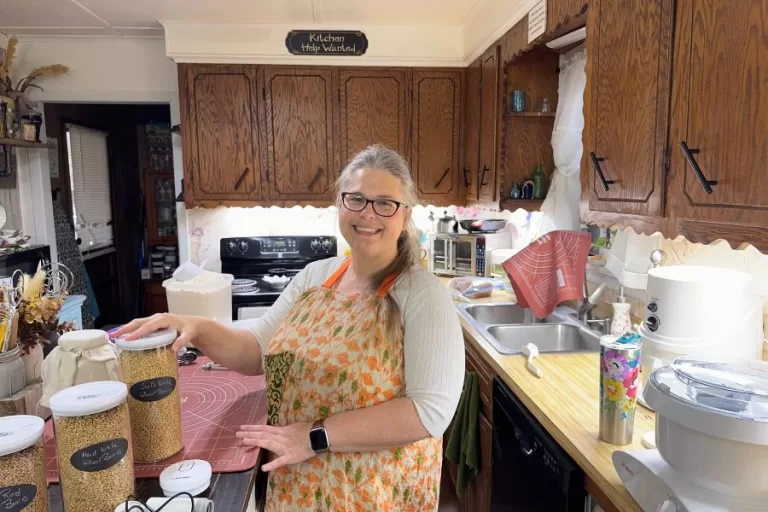
Early on, I thought I needed to mill flour every time I baked. That sounds wonderful in theory, but our home doesn’t operate in theory. We homeschool, we’re involved in ministry, people sleep at different times, and life stays busy. My NutriMill Classic lives in the laundry room, and I know myself well enough to admit that if I have to drag it out every single time I need flour, I’m probably going to reach for the unbleached all-purpose flour instead.
That’s when I realized I didn’t need perfection. I needed a rhythm.
Now, when I know I’m going to be baking that week, I mill ahead and store my flour properly. Is it exactly the same as using it immediately after milling? No. But it means I actually use it, and that’s what matters.
One of the biggest lessons from 6 months of fresh milled flour is that success comes from creating systems you can maintain. The more I think about it, the more I realize fresh milled flour is a lot like cooking from scratch in general. It feels overwhelming at first, but once you build a routine, it becomes part of everyday life.
What 6 Months of Fresh Milled Flour Taught Me About Real-Life Eating
One thing I didn’t expect was how much my family would notice the difference in the way we eat.
Before our recent vacation, I made a loaf of bread so we’d have sandwiches and toast while we were away. That may sound silly to some people, but my crew genuinely prefers homemade bread now. Having that loaf with us helped us stay somewhat on track while we were gone.
Of course, vacations have a way of changing routines. We still ate foods that we don’t normally eat at home, and by the end of the trip, everyone was ready to get back to our regular meals.
What surprised me most was hearing both my son and daughter talk about it. They were genuinely glad to be home and eating the foods they were accustomed to again.
Now, I’m not making medical claims, and I’m certainly not saying fresh milled flour is a miracle food. What I am saying is that we’ve noticed a difference. When we’ve spent months eating mostly homemade foods and then suddenly switch back to highly processed foods, our bodies seem to notice the change.
One thing I’ve learned over the last six months is that healthier habits aren’t always noticed while you’re doing them. Sometimes they’re noticed when you stop doing them for a little while.
I’ve also learned that fresh milled flour doesn’t magically make everything healthy. While I absolutely believe it’s a better option than highly processed flour, it’s still flour. It’s still a carbohydrate. It’s still something we should approach with balance and wisdom.
Over the last several months, I’ve personally become more intentional about what I eat. While my family still enjoys plenty of bread, I’ve focused more on protein and balance because of my own health goals. Learning moderation has been just as important as learning how to bake.
What 6 Months of Fresh Milled Flour Taught Me About Learning
If you’ve followed this series from the beginning, you’ve probably heard me talk about mistakes. Trust me, there have been plenty.
I’ve grabbed the wrong wheat berry. I’ve measured yeast incorrectly. I’ve made loaves that were too dense and rolls that didn’t rise the way I expected. At the time, those moments felt frustrating. Looking back, they were some of my greatest teachers.
One of the best examples was when I accidentally used soft white wheat in a recipe that needed hard white wheat. I couldn’t understand why the dough kept tearing apart until I realized what I had done. Then there was the time I couldn’t figure out why my rolls weren’t rising properly, only to discover that I had written down the yeast amount incorrectly.
Those moments aren’t fun when they happen, but they remind me that learning is rarely a straight line.
Then there’s sourdough.
I already loved sourdough before I started milling my own flour. I had finally reached a place where I felt comfortable with it. Then I introduced fresh milled flour into the equation and suddenly felt like a beginner all over again.
Fresh milled flour sourdough is a whole other beast.
Some days it works beautifully. Other days I find myself staring at a loaf wondering what happened. At this point, I’ve decided to give myself permission to learn slowly. I’d rather understand it well than rush ahead and pretend I know more than I do.
Honestly, you’ll probably hear much more from me about fresh milled flour sourdough next year than you will this year. For now, my regular sourdough starter is working just fine, and I’m continuing to learn one loaf at a time.
One thing 6 months of fresh milled flour has taught me is that mistakes don’t mean you’re failing. Most of the time, they simply mean you’re learning.
Starting Small Is Still Progress
Recently, someone asked me how to get started milling flour. As we talked, I learned she was raising two small children, working a full-time job, and just beginning to learn how to cook and bake from scratch.
My advice surprised her because I didn’t tell her to run out and buy a grain mill immediately. Instead, I encouraged her to learn how to bake with unbleached all-purpose flour first.
Not because I didn’t think she could learn fresh milled flour. I absolutely think she could. But I also wanted her to succeed.
When we’re trying to change everything at once, it’s easy to become overwhelmed. Cooking from scratch has a learning curve. Bread baking has a learning curve. Fresh milled flour has a learning curve. Trying to tackle all three at the same time can feel like a lot.
I’ve heard of people slowly transitioning by replacing part of the flour in a recipe with fresh milled flour and gradually increasing the amount over time. For many families, that’s a realistic and sustainable approach.
Sometimes we get excited about making healthier changes and want to do everything at once. The problem is that when we become overwhelmed, we’re more likely to quit.
There’s no prize for getting there the fastest.
Learn to bake a loaf of bread. Learn a few family recipes. Get comfortable in the kitchen. Then, when you’re ready, add fresh milled flour into the mix.
Small steps are still progress.
What I’m Looking Forward to Over the Next Six Months
If the first six months have been about learning the basics, I think the next six months will be about strengthening those foundations.
Right now, I don’t feel the need to rush into every new grain, recipe, or technique. There is still plenty for me to learn with the wheat berries already sitting in my pantry. I want to continue improving my breads, refining the systems that work for our family, and becoming more confident with sourdough over time.
One thing 6 months of fresh milled flour has taught me is that growth doesn’t always come from adding something new. Sometimes growth comes from doing the same thing over and over until it becomes second nature.
And honestly, I think that’s where I am right now.
I’m no longer trying to figure out if fresh milled flour can fit into our lifestyle. Instead, I’m learning how to make it a consistent part of our everyday rhythm. That’s a very different place to be than where I started six months ago, and I’m grateful for the progress we’ve made along the way.
Watch My 6-Month Fresh Milled Flour Update
If you’d like to hear more about where I am in this journey, I’ve shared a video update on YouTube that goes along with this post. This isn’t a tutorial or a step-by-step guide. It’s simply an honest conversation about what’s working, what’s challenging, and what I’m learning along the way.
👉 New to fresh milled flour? Start here.
If you’re just joining this journey, be sure to visit the Fresh Milled Flour section of the blog. You’ll find everything from getting started, to storage, to recipe conversions, along with a few simple recipes I’ve tried and enjoyed along the way.
From My Kitchen to Yours
Over the past year, I’ve had the chance to use several NutriMill products in my own kitchen, and they’ve truly become part of our everyday rhythm.
The NutriMill Classic Grain Mill has been the biggest game changer for us. Being able to mill fresh flour at home has not only improved the quality of our baking, but it’s also helped me feel more confident about what I’m feeding my family.
I’ve also started using a few of their newer products, like the dough mats (which I didn’t realize I needed until I used one!) and the Bosch Universal Plus Mixer, which has been a huge help as I’ve grown more serious about baking.
What I appreciate most is that these are tools built to last. From my experience, NutriMill stands behind their products, and that matters when you’re investing in your kitchen.
If you’ve been considering a grain mill or upgrading your baking tools, I’d simply encourage you to keep an eye on their sales. You can use my code MAKINMACON for $20 savings on select products. Watch for the sales and save even more!!!
If you do choose to shop through my link or use my code, it’s a simple way to support our family and the work we’re doing here at Makin’ Macon, and I’m truly grateful.
I’ll always share honestly what’s working in my kitchen, and this is one of those things I’d choose again without hesitation.
✨ Join the Rooted Table!
Get fresh recipes, freezer tips, and encouragement for home cooks, plus my 15 Frugal Family Meals plan free when you subscribe.
I’m so glad you’re here.
And remember, I’m always praying for you, even if I don’t know who you are.