How to Bake with Soft White Wheat Using Fresh Milled Flour

February often feels a little quieter in our home. The rush of the new year has settled, routines are taking shape, and there’s space to notice what’s working—and what isn’t. This slower pace has made it the perfect time for us to continue learning about fresh milled flour in a practical, real‑life way.
In January, I shared the foundation of our fresh milled flour journey—why we’re learning this, what wheat berries are, and how this shift fits into everyday family life. If you’re brand new, that post is a helpful place to start: Fresh Milled Flour for Beginners: A Simple, Year‑Long Family Journey.
Rather than reteaching the basics here, this post focuses on what fresh milled flour looks like in our kitchen right now—specifically through working with soft white wheat, testing familiar recipes, and learning as we go.
Why Soft White Wheat Works Well for Everyday Baking
When you’re new to fresh milled flour, it’s easy to assume you need to jump straight into yeast breads or sourdough. In my experience, that’s often where discouragement sets in.
Soft white wheat is lower in protein than hard wheats, which means it creates tender, softer baked goods. It shines in recipes that don’t rely on strong gluten structure, making it a gentle place to learn—without the pressure of perfection.
How Soft White Wheat Shows Up in Our Kitchen
I want to pause here and be honest—this journey didn’t start with me knowing exactly what I was doing. I came into fresh milled flour curious and willing to test things slowly before making big claims.
So far, here’s how soft white wheat has been showing up in our kitchen this month:
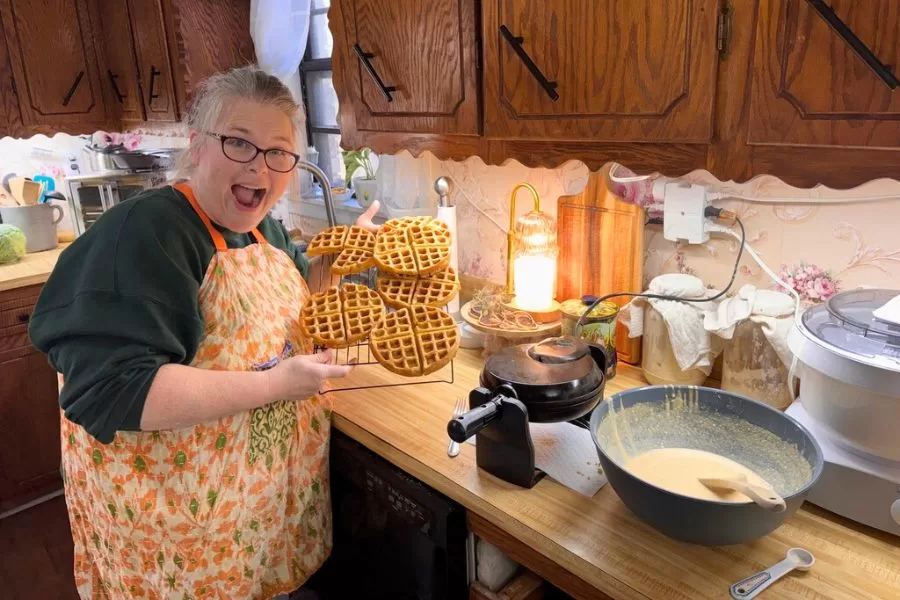
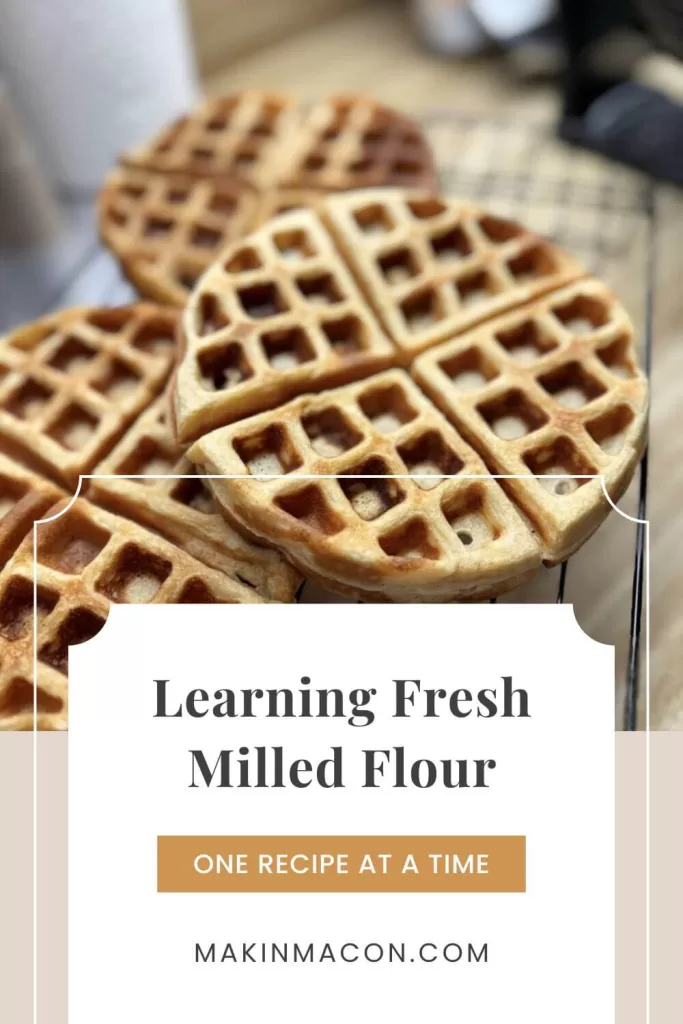
- Waffles were our first test—and they were a win. Using our familiar homemade waffle recipe and swapping in freshly milled soft white wheat helped me see just how forgiving this grain can be.
- Pancakes came next. They tasted good, but they were noticeably flatter than what we were used to.
- Cookies were our third test. They turned out tasty, but I’m still dialing in what I love most about them with soft white wheat—and I want to test this grain across several different cookie recipes before calling it a true win.
- Sourdough biscuits were another test. They were very good and flaky, but they didn’t rise quite as well as they normally do—something I’m still learning and adjusting as I go.
- Muffins are next on my list. I want to test them well before saying they’re a go-to, because I believe in sharing what actually works—not just what sounds good.
This is what learning soft white wheat looks like for us right now: trying familiar recipes, paying attention to how they behave, and adjusting as we go—without rushing the process.
That slow, steady approach is where confidence starts to grow.
What I’m Still Paying Attention To with Fresh Milled Flour
As I continue working with soft white wheat, there are a few things I’m intentionally watching and learning as I go:
- Hydration: how much rest time makes the biggest difference in batters versus doughs
- Structure: which recipes need a little more strength and which ones thrive with tenderness alone
- Rise: noticing when soft white wheat performs beautifully and when another grain may be needed
- Flavor: how fresh milled flour tastes across different recipes and over time
None of this is about getting it perfect. It’s simply about paying attention, taking notes, and letting experience guide the next step.
And here’s a little full‑circle moment I can’t help but laugh at: I hated science and math growing up. Truly. Yet here I am—measuring, testing, adjusting, and learning through trial and error in my own kitchen. Turns out, I don’t mind science at all… as long as it involves an apron and wheat berries.
Coming Next in Our Fresh Milled Flour Journey
As we move forward, I’ll continue sharing what I’m learning—what works, what needs adjusting, and how familiar recipes can slowly be adapted to fresh milled flour.
Next, we’ll focus on simple flour conversions and swapping fresh milled flour into recipes we already know and love.
If you missed January’s post, I encourage you to start there: Fresh Milled Flour for Beginners: A Simple, Year-Long Family Journey
I’m so glad you’re walking this road with me—one step at a time.
Ready to Keep Learning?
If fresh milled flour has sparked your curiosity, I’d love for you to keep exploring the blog. I’ve created a Fresh Milled Flour section under the Recipes category so you can easily find all of our fresh milled flour posts and recipe swaps in one place as this journey continues.
And if you enjoy getting new recipes, simple kitchen tips, and encouragement right in your inbox, you’re invited to join Rooted Table—my once-a-month recipe email where I share what we’re cooking, what’s working, and reminders that a homemade meal doesn’t have to be perfect to be a blessing.
Whether you’re milling grain or just cheering from the sidelines, I’m thankful you’re here.
And remember, I’m always praying for you, even if I don’t know who you are!