
How to Safely Dilute Essential Oils for Rollers, Sprays, and Diffusers

There was a time when I felt completely overwhelmed trying to understand essential oil dilution, especially when trying to find an essential oil dilution guide that actually made sense. Every article seemed to say something slightly different, and I often found myself going back to my notes or checking trusted resources just to make sure I was doing things correctly.
I’m certainly not an expert, but over time I’ve learned a few simple guidelines that make using essential oils at home much easier. When I’m unsure about something, I still double‑check my information.
Today I want to share the simple dilution approach I use in my own home so you can feel more confident creating blends without second‑guessing yourself.
Why an Essential Oil Dilution Guide Matters
Essential oils are highly concentrated. A single drop can contain plant compounds from a surprisingly large amount of plant material. Because of this concentration, dilution is commonly recommended by aromatherapy educators and essential oil safety guides.
Proper dilution helps oils spread more evenly across the skin, reduces the chance of irritation, and allows blends to last longer. It also helps keep everyday use gentle and practical for families who want to incorporate oils into normal routines.
When essential oils are combined with carrier oils or properly diluted in sprays and diffusers, they become much easier to use safely in the home.
Simple Essential Oil Dilution for Roller Bottles
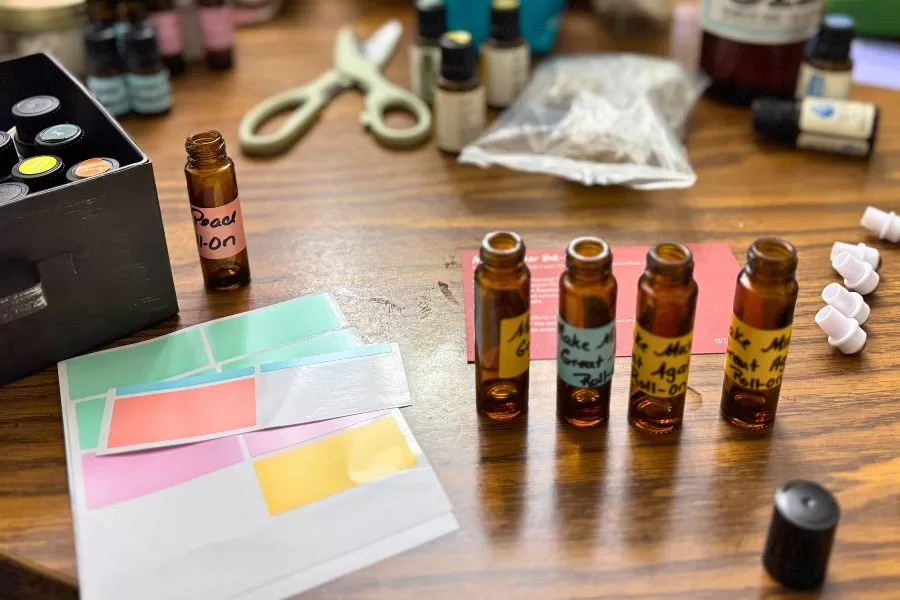
Roller bottles are one of the easiest ways to use essential oils throughout the day. For a standard 10 ml roller bottle, a gentle everyday dilution usually falls between six and ten total drops of essential oil. After adding the oils, the rest of the bottle is filled with a carrier oil such as fractionated coconut oil, sweet almond oil, or jojoba oil. Personally, I tend to reach for fractionated coconut oil most often because it feels light on the skin and doesn’t seem to leave a heavy or greasy residue.
This range generally creates a dilution around one to two percent, which is commonly recommended for everyday use. Many people enjoy roller blends for headaches, calming support, sleep routines, or seasonal discomfort.
Once blended, the roller can be applied to the wrists, back of the neck, or bottoms of the feet whenever a moment of support is needed.
Diluting Essential Oils for Room Sprays
Room sprays are a simple way to freshen your home or enjoy a blend without turning on the diffuser. The ratio I use most often is for a four‑ounce spray bottle.
To make a spray, start by adding about one ounce of witch hazel to the bottle. Essential oils are then mixed into that first before adding roughly three ounces of distilled water. Most room sprays fall somewhere between ten and twenty total drops of essential oil depending on how strong you prefer the scent.
I prefer using amber spray bottles for these blends because darker glass helps protect the oils from light and helps preserve their quality over time. Once everything is combined, simply shake the bottle well before each use and lightly mist around the room, on linens, or into the air.
Essential Oil Dilution for Diffusers
Diffusers are one of the simplest ways to enjoy essential oils because they do not require a carrier oil. For most standard diffusers that hold around 200–300 ml of water, a typical recommendation is three to six drops of essential oil total.
If you are combining oils in a blend, the drops can simply be divided between them. For example, a calming blend might include four drops of lavender and two drops of chamomile. Each oil actually carries its own scent strength and note, so sometimes you may naturally use more of one oil than another to create a balanced aroma. Learning how oils work together takes a little practice, but that is a whole deeper lesson for another day.
Most aromatherapy educators recommend diffusing for about thirty to sixty minutes at a time in a well‑ventilated room. Many diffusers also include intermittent settings, which can help prevent over‑diffusing.
A Few Practical Safety Reminders
Essential oils can be wonderful tools in the home, but thoughtful use is important. When creating a new blend, it is always wise to start gently and test oils in small amounts.
It’s also helpful to test blends on a small patch of skin before regular use, use extra caution with children, pets, or during pregnancy, and store oils out of reach of children.
If you would like to dig deeper into essential oil safety and blending, there are many helpful resources available online. One I’ve personally found helpful is the Simply Earth blog and their Essential Oil Hero Course that comes with their monthly subscription box. I also appreciate that their subscription boxes are flexible — you can pause them anytime if a month doesn’t apply to you or you already have the oils included.
If you decide to try the Simply Earth subscription box, you can use my code MAKINMACONFREE. New subscribers receive a $45 gift card after their first box purchase, which makes it easier to keep learning and experimenting with oils at home.
Essential Oils I Reach for Most Often
If you are just starting out with essential oils, you do not need a large collection. In my own home, I find myself reaching for a small group of oils again and again. Lavender is wonderful for calming blends, lemon helps brighten the atmosphere of a room, peppermint can feel refreshing during seasonal changes, orange adds a cheerful scent to diffuser blends, and cedarwood brings a grounding, woodsy balance.
These few oils alone can be combined in many different ways and work well in diffuser blends, cleaning recipes, and simple rollers.
Simple Blends Make the Best Rhythms
Essential oils do not need to be complicated to be helpful. Some of the blends I use most often are the simplest ones. When you understand a few basic dilution guidelines, it becomes much easier to create blends that support your home and everyday routines.
If you enjoy learning about essential oils and simple homemaking rhythms, be sure to explore the Essential Oils section here on Makin’ Macon. And if you’d like to receive new blends, natural living ideas, and encouragement before they reach the blog, I share those first with my Fragrant Faith email group.
And remember, I’m always praying for you — even if I don’t know who you are.
**Disclaimer:** I am not a medical professional. The information shared in this post is based on personal experience and research. Always consult a qualified healthcare provider before using essential oils, especially if you are pregnant, nursing, or using them with children. Use essential oils as directed and dilute them properly.